Laminated foil
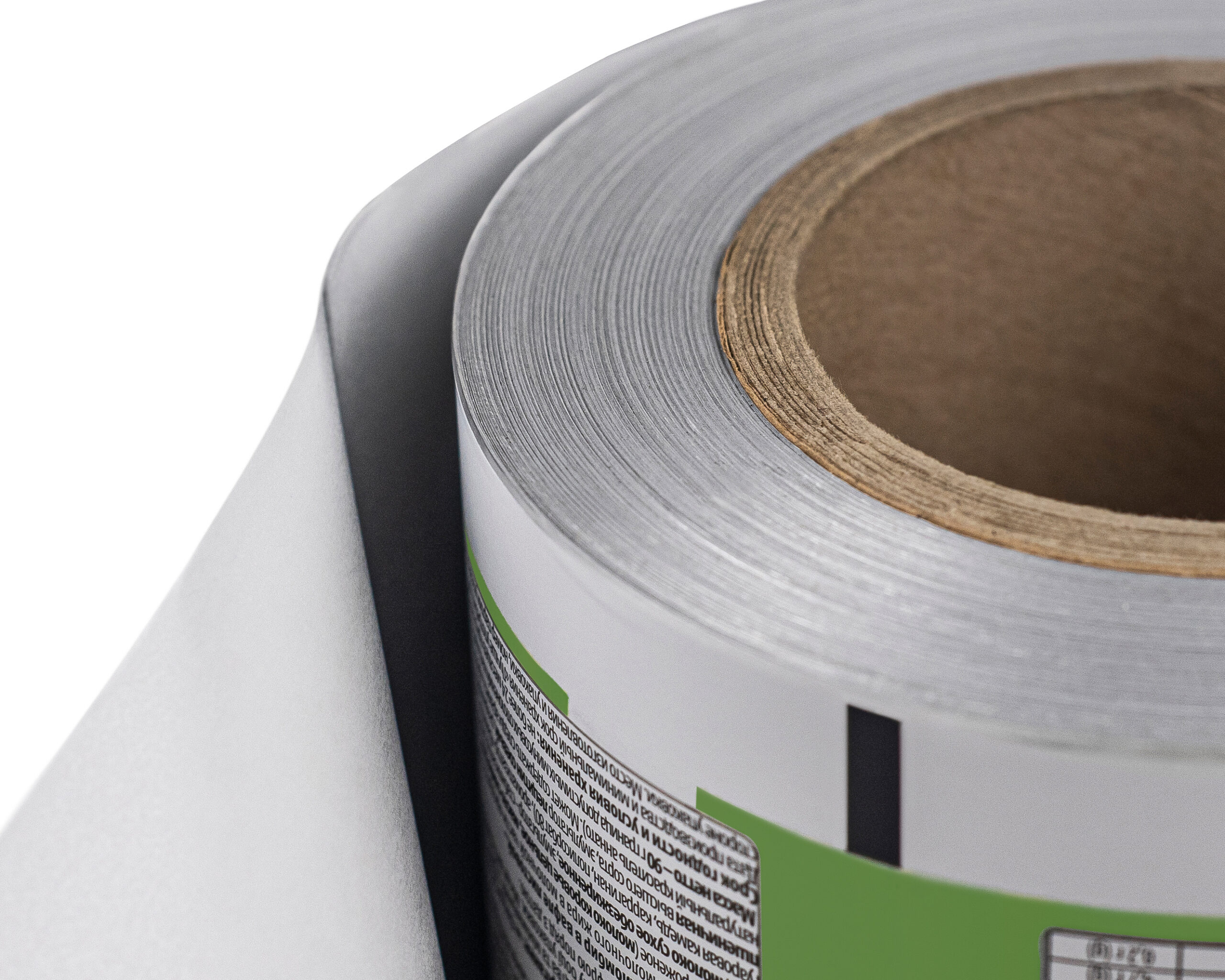
Laminated foil consists of aluminum, which by gluing (laminating) with other layers of two or more materials becomes one whole with them.
There are two most common options for gluing foil to paper:
- Special glue or microwax, the so-called “adhesive lamination”. The advantage of adhesive lamination is the rigidity of the material, which takes and keeps the shape of the package perfectly. The same method can be used to glue paper with a polyethylene coating. The presence of PE gives the laminated foil elasticity and softness. In addition, PE is an additional barrier to the penetration of moisture and grease from the product.
- Gluing paper to foil using PE melt. In this case, the PE melt is extruded onto the foil and the paper is placed and pressed directly onto the melt. The paper can be both with and without PE. The advantage of such a design is the exclusion of the fact of possible delamination, excellent grease and moisture resistance, and elasticity of the material.
Three-layer and four-layer laminated foil with polyethylene are most often used.
Depending on the customer’s wishes, it can be with a matte or glossy surface.
Advantages of laminated foil among other packaging materials:
- excellent barrier properties;
- perfectly retains its shape for a long time after packaging;
- takes the shape well on packaging machines;
- grease and moisture impermeability;
- absolute opacity;
- impermeability to vapors and gases.
Application:
It is most often used for packing butter, margarine, spreads, ice cream, cheese and curd mass, fresh yeast.
Technical capabilities:
- flexographic printing up to 9 colors;
- minimum batch with printing from 30 kg;
- material width up to 270 mm;
- development of the original design.
We offer the following types of foil for printing:
- three-layer laminated foil (aluminum foil, polyethylene, paper);
- four-layer laminated foil (aluminum foil, polyethylene, paper, polyethylene).